

Transforming Justice Through Mental Health Reform
Across the United States, jails have unintentionally become the largest mental-health institutions—housing thousands of individuals who are not criminals, but rather people living with untreated mental illness. In his compelling keynote address during the 4th Annual Behavioral Health and Public Safety Summit last December 4th, retired Judge Stephen Leifman, a national leader in mental-health and criminal-justice reform, revealed how this crisis unfolded and what communities can do to reverse it.
For decades, individuals with psychiatric conditions have cycled through a revolving door of arrest, homelessness, hospitalization, and incarceration, often without ever receiving the treatment they need. Judge Leifman noted that a person with a mental illness is far more likely to encounter law enforcement than a mental-health professional—an imbalance that fuels overcrowded jails and broken lives.
But there is hope—and proof—that meaningful reform works. Watch his keynote speech below:
Judge Leifman showcased the groundbreaking success of Miami-Dade County’s mental-health diversion model, a program he helped pioneer. By training police in Crisis Intervention Team (CIT) techniques, improving early identification of individuals with mental illness, and expanding access to community-based treatment, Miami-Dade dramatically reduced arrests and even closed an entire jail facility. The results were transformative: millions of taxpayer dollars saved, fewer incarcerations, and safer communities.
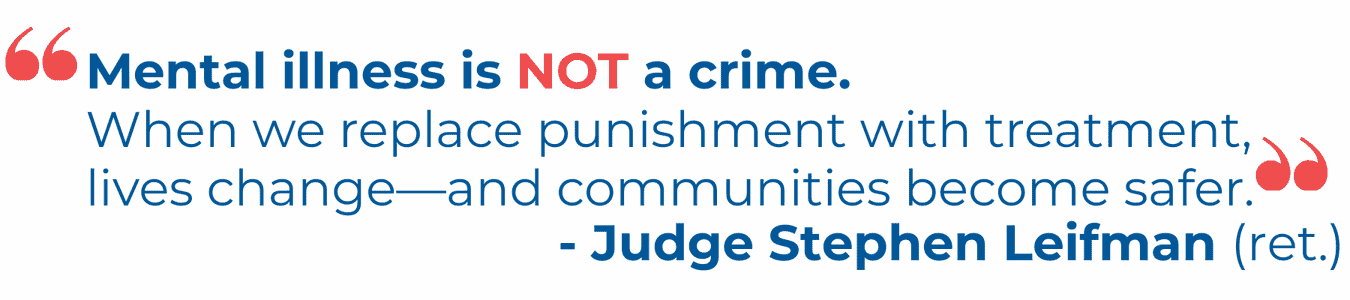
At the heart of the keynote was a powerful message: mental illness is not a crime. The people trapped in the criminal-justice system are often victims of inadequate care—not perpetrators. Judge Leifman shared moving personal stories that highlighted the trauma, stigma, and systemic failures experienced by this population, urging communities to replace punishment with compassion.
Looking forward, he outlined a vision for a modern, humane approach to crisis response—one that includes dedicated crisis-care centers, improved access to treatment, and stronger collaboration between courts, healthcare providers, and community partners. These solutions, he emphasized, not only restore dignity to individuals in need but also strengthen public safety and reduce long-term costs.
Judge Leifman’s keynote reminds us that change is both possible and measurable. By embracing evidence-based mental-health strategies, communities can break the cycle of criminalization and build systems that offer care, stability, and hope.
