Stories Ending Stigma

Real recovery stories breaking addiction stigma

Knowledge Center

Human Resources

Empowering healthy workplaces

Newsletter

Updates and news about our initiatives

Webinar

Educational sessions on opioid issues

Education

Research

Opioid crisis impact data

u

FAQs

Common questions and answers

Thanks to the continued funding from Central Florida Behavioral Health Network, our anti-stigma program STORIES ENDING STIGMA is continuing. 

The program that had almost 14 million impressions in its 8-week pilot will now be back now for 7 months as we work together to remove stigma in the Tampa Bay Area.

USF determined that even our pilot program led to “significant impacts in aspects of nearly every domain of addiction stigma . . . The report reflects the overwhelming success of the Stories Ending Stigma Campaign.”

You can read USF’s report on our pilot program here:

As we know, research has proven that effective stigma reduction efforts normalize substance use disorder (SUD) diagnosis, treatment, and recovery and increase outreach by those with SUD to supportive services.

So the less people feel shame, the quicker they are to ask for help, the less people die. It’s pretty straightforward. 

How can you be of help with this?

We’d love to hear from you. 
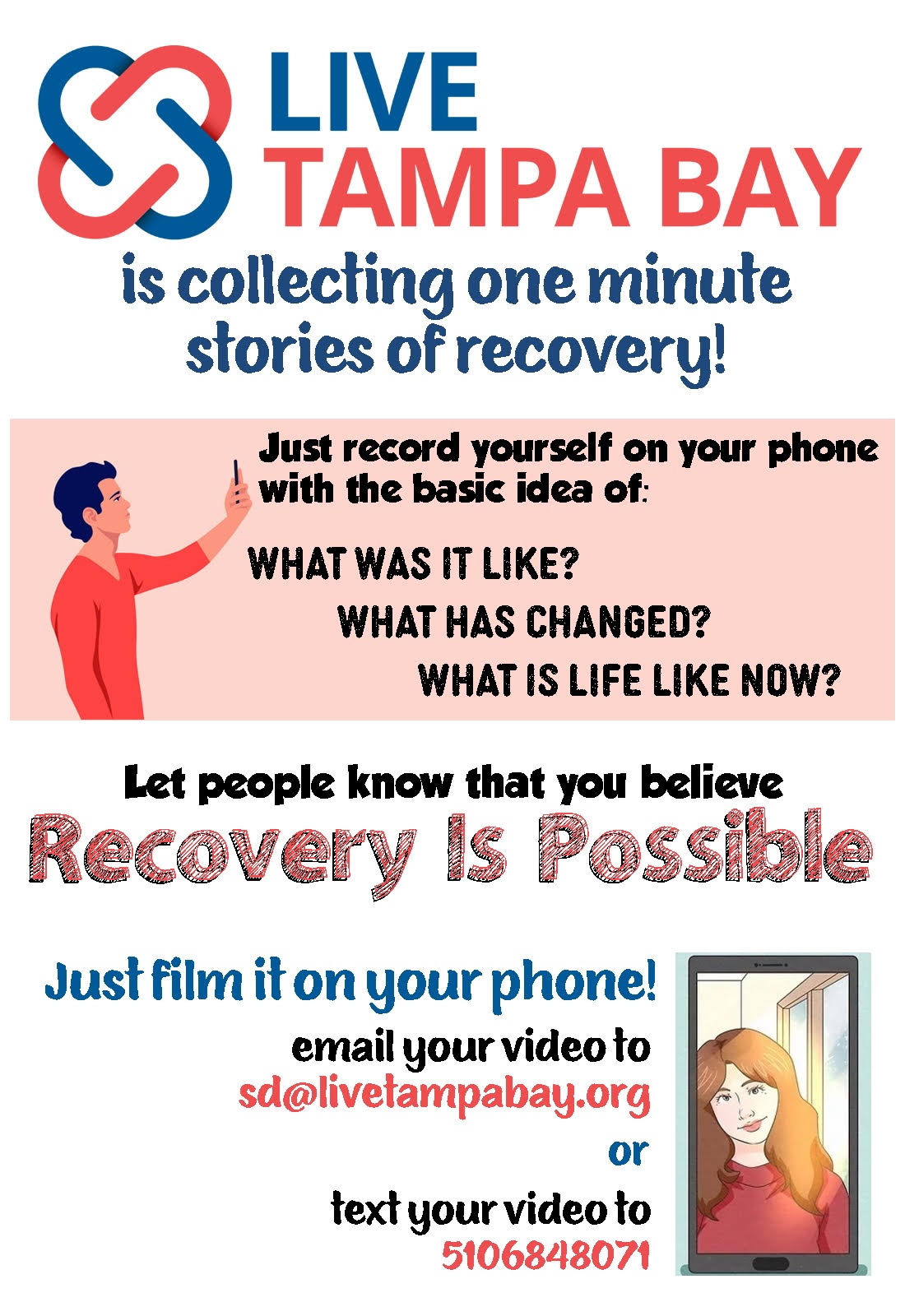
Send a one minute video about your relationship to recovery. 
Are you in recovery?
Is a family member? 
All viewpoints are valued and need to be celebrated. 
Send to sd@livetampabay.org or you can text to 5106848071.

Related Posts

Women Shaping the Recovery Movement

If addiction were only about the substance, everyone exposed to the same drug would have the same outcome. We know that’s not how it works. One famous series of experiments, often called “Rat Park”, offers a surprisingly human lesson: our environment and our sense of belonging can dramatically shape how we relate to substances.

Letter from the CEO

This February, I’ve been thinking a lot about how loneliness, overdose, and stigma show up in real lives here in Tampa Bay, and what it would look like for all of us to respond with more compassion, not more pressure. In my letter, I share why connection and person‑first language matter so much, how Black communities are carrying a disproportionate share of this crisis, and three simple ways we can care for ourselves more kindly while helping someone else feel less alone.